Introduction
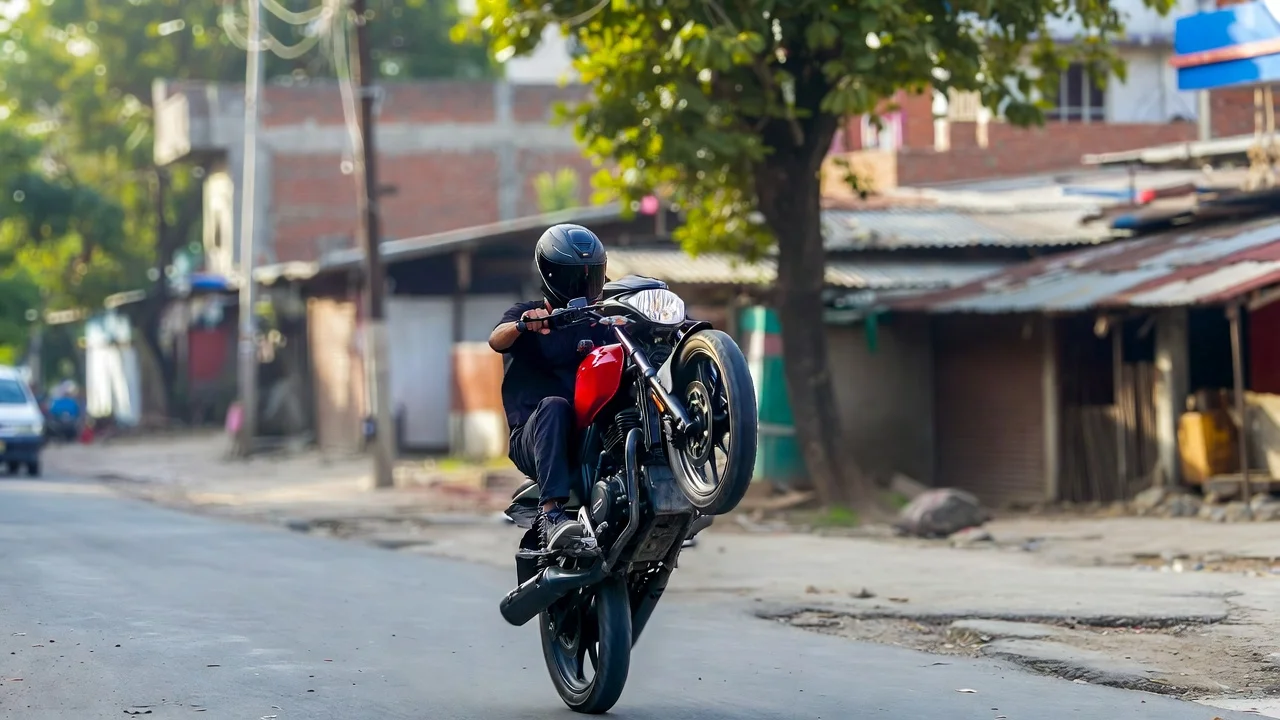
A stoppie, also known as an endo or front wheelie, is an advanced motorcycle maneuver where the rear wheel lifts off the ground as you brake firmly and transfer your weight forward. While it’s an exciting skill, it’s also risky if attempted incorrectly. This guide breaks down how to do a stoppie responsibly and safely — especially useful for riders in Bangladesh who want to improve control and awareness on their bikes.
Quick Answer
A stoppie is performed by progressively applying the front brake while shifting your body weight forward, causing the rear wheel to lift. It must be practiced in a safe, open area with protective gear and a mechanically sound motorcycle.
What is a Stoppie? (Basic Explanation)
A stoppie (also called an endo) is a stunt where the rear wheel of a motorcycle lifts off the ground when the rider uses aggressive front braking and forward weight transfer. It’s visually striking and teaches advanced balance and brake control, but it’s not a technique to attempt on public roads due to safety and legal concerns.
Essential Safety Gear and Preparation
Before attempting a stoppie, ensure the following:
-
Protective Gear: Full‑face helmet, armored jacket, gloves, riding pants, and sturdy boots.
-
Bike Condition: Check front brake pads, tire pressure, and suspension.
-
Practice Surface: Choose a flat, dry, debris‑free parking area or closed course.
-
Warm Up: Test brakes and get a feel for the bike’s handling.
Prioritize safety over spectacle — a stoppie gone wrong can result in serious injury or damage.
Step‑by‑Step Guide to Performing a Stoppie
1. Get Comfortable With Your Bike
Start with a motorcycle that’s well suited to learning advanced control — ideally a commuter or lightweight bike rather than a heavy cruiser. If you’re in Bangladesh and considering your next ride, checking the latest bike price in Bangladesh can help you pick a model with smooth, predictable brakes.
2. Approach at Moderate Speed
For beginners, keep speed moderate — 15–30 mph (25–50 km/h) is ideal. Too fast increases risk, while too slow won’t generate enough momentum for a rear lift.
3. Position Your Body
Shift your body slightly forward while moving toward your stopping point:
-
Clench the tank with your knees.
-
Eyes looking ahead, not at the front wheel.
-
Arms relaxed yet firm on the bars.
This forward weight shift helps load the front suspension, making it easier to lift the rear wheel.
4. Progressive Front Brake
Gently apply the front brake first — do not grab it suddenly. Gradually increase pressure as the front suspension compresses and the weight pushes forward.
5. Lift and Balance
As rear wheel starts to rise:
-
Modulate brake pressure to control height.
-
Keep body centered over the front wheel.
-
Use core muscles for stability.
Avoid snapping the brake lever; smooth inputs give better balance.
6. Controlled Descent
To bring the rear wheel down:
-
Ease off the brake gradually.
-
Slightly shift weight back.
-
Avoid a sudden release — soft transitions are safer.
Common Mistakes to Avoid
| Mistake | Consequence | How to Fix |
|---|---|---|
| Grabbing front brake suddenly | Wheel lock‑up or crash | Apply brakes progressively |
| Not shifting weight | Rear won’t lift | Move body forward intentionally |
| Looking down | Loss of balance | Keep eyes forward |
Beginners should practice small lifts before attempting longer or higher stoppies.
Practice Progression for Riders
Stage 1 — Micro Stoppies
Get rear wheel a couple of inches off ground with minimal brake application.
Stage 2 — Controlled Hold
Hold rear wheel elevated for a short duration while balancing.
Stage 3 — Rolling Stoppies
With experience, perform stoppies while rolling forward then easing brake to ride off.
Motorcycle Types Suitable for Stoppies
Different bikes behave differently when you attempt a stoppie:
-
Commuter Bikes: Great for learning basics due to lighter weight and predictable brakes.
-
Sport Bikes: Quick response but require more skill due to sharp brakes.
-
Heavy Cruisers: Harder to lift due to weight and geometry — avoid until experienced.
In Bangladesh, most riders start on commuter bikes — check out options like Commuter Bikes in Bangladesh for smooth control and practice base.
Why Stoppies Are Advanced and Risky
Although stoppies look cool, they are advanced maneuvers that:
-
Put significant stress on front suspension and brakes
-
Increase risk of going over handlebars with abrupt inputs
-
Are not legal on public roads in many countries
Always restrict stunt practice to controlled environments.
Does ABS Affect Stoppies?
Anti‑Lock Braking Systems (ABS) can intervene during aggressive front brake use. Some ABS systems may prevent the lift needed for a stoppie, while others allow minor lifts before activating. This varies by motorcycle and should be tested carefully in safe conditions.
FAQ
Q1. Can a beginner learn stoppies?
A: Beginners should master basic braking and balance first. Start with small lifts in safe areas.
Q2. Is it legal to do stoppies on public roads in Bangladesh?
A: Performing stoppies on public roads can be considered reckless riding and may lead to penalties.
Q3. Does my bike need special modifications?
A: No, but well‑maintained brakes and tires improve control.
Q4. Can ABS be turned off for stunt practice?
A: Some bikes allow ABS to be disabled; consult your manual and only practice in safe, private areas.
Q5. Does repeated stoppie riding damage the bike?
A: Frequent high lifts and hard landings can accelerate wear on brakes, forks, and tires. Regular checks are recommended.
Conclusion
Learning how to do a stoppie takes patience, brake control, and safe practice. While many Bangladeshi riders focus on affordable, fuel‑efficient commuter bikes for daily commuting (check Bikes Under ৳80,000 and Bikes Upto 100cc for commuter options), mastering advanced techniques like stoppies builds confidence and riding skills.
Always prioritize safety first — protective gear, controlled environments, and incremental practice make the difference between a fun skill and a dangerous mistake.
💬 Discussion & Comments
Share your thoughts about this article, ask questions, or engage with other readers.
✍️ Leave a Comment
Be the First to Comment!
Share your thoughts and start the conversation.